

The use of AI in HR and how it can benefit you

At OneHR, we’re always keen to understand and embrace new technology to see how it can help us work more efficiently and effectively for our clients – by keeping an open mind and maintaining a critical eye.
It is important to consider how, not just HR, but the world of work changes and evolves. The evolution of technology such as ChatGPT has been extremely rapid and all encompassing. As most of us are now aware, ChatGPT is an artificial intelligence chatbot developed by OpenAI, a leading artificial intelligence research and deployment company based in San Francisco, and released in November 2022. The name “ChatGPT” combines “Chat”, referring to its chatbot functionality, and “GPT”, which stands for generative pre-trained transformer, a type of large language models (LLMs).
Why was ChatGPT created? ChatGPT: “As a language model, my main goal is to assist users in any way I can by providing accurate and helpful information on a wide range of topics. I am designed to be able to generate human-like text and respond to questions and statements in a way that is similar to how a person would.”
Early on, this technology caused concern in academic circles with plagiarism and then further reaching in many areas as people feared it would change jobs and replace humans. This concern has been echoed by many influential people. For example, the open letter, titled ‘”Pause Giant AI Experiments” was organised by the not-for-profit Future of Life Institute and signed by more than 27,565 people (as of 08 May 2023). Some European countries have banned ChatGPT altogether.
However, change is always difficult, especially rapid change such as this technology has produced. Although there is certainly a place for regulation in this field, there is also an opportunity to use this technology for the advantage of us all, by understanding its benefits as well as its pitfalls. It is acknowledged that in academia, it will be adopted as a tool and this is becoming a common attitude in other areas too. There is no doubt at this stage that having an experienced human being with relevant expertise to oversee the technology’s output is essential to realise these benefits.
With this in mind, this month, we’ve been trialling ChatGPT. Within our HR network and community, there has been a lot of discussion about this AI technology and we wanted to experience it for ourselves. We asked it to write a blog on ‘The use of ChatGPT in HR”, to understand what it had to offer, what leaders think about it and what risks or pitfalls to look out for when it is used in HR as it will be in most other industries to varying degrees.
Below are snippets of what ChatGPT wrote for us, as well as our thoughts on it, based on years of hands-on and strategic HR expertise.
How it works
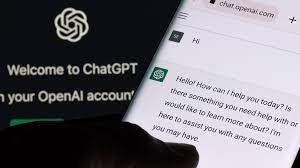
If you’ve not tried ChatGPT yet, it is worth noting that it works best with concise prompts. For example, “Write the blog in British English” (as opposed to American English). We used prompts with ‘GB’ or ‘UK’ in them. As a guide, we referenced a specific URL to one of our previous articles and the system then was able to understand and copy our tone. We used the prompt “Thought leaders” which helped to produce the information at the right level for us (and our clients). It is best to use only 3 to 4 ‘good’ prompts, otherwise it will start to struggle to understand what you are looking for. There are plenty of blogs on what good prompts look like – click here.
The ChatGPT blog
The AI definitely copied our tone and used keywords often found in our articles:
“Here at OneHR, we constantly strive to harness technology to enhance various aspects of human resources management. […] With its remarkable capabilities in natural language processing and understanding, ChatGPT offers several benefits to the field of HR. In this article, we will explore how ChatGPT can revolutionise HR practices and enhance efficiency in the workplace.”
It provided clear headings (see below); although not particularly well formatted, the structure was balanced as it included the con’s as well as (more on this later).
- Streamlining Recruitment Processes:
- Enhancing Employee Onboarding:
- Improving Employee Support and Engagement:
- Assisting with Performance Management:
- Facilitating Learning and Development:
- Promoting Diversity and Inclusion:
- Leveraging Thought Leaders for HR Transformation:
Under each heading, the AI blog provided a useful summary of the advantages of using ChatGPT, clearly outlining what it can be used for in HR, how to get the best out of it and emphasising the advantages. There was no cause for concern that the information wasn’t factual, informative and correct.
It picked up on the prompt “Thought leaders” and wrote the blog at a level aimed at senior managers – thus achieving our aim.
“By leveraging the expertise of thought leaders, organisations can stay at the forefront of HR transformation and maximise the benefits of ChatGPT in their specific contexts.”
It also provided potential con’s for using ChatGPT in HR and these were the headings we had heard about from our peers in forums and through networking, and were therefore expecting:
- Lack of Emotional Intelligence:
- Risk of Bias and Discrimination:
- Limited Contextual Understanding:
- Data Privacy and Security Concerns:
- Overdependence on Technology:
- Technical Limitations and Errors:
- Resistance and Employee Acceptance:
Finally, it provided a small conclusion at the end of the blog.
Our Opinion – Pro’s

Using ChatGPT is an effective use of time to produce decent information. The ChatGPT blog was created in 20 minutes and we were learning as we went along; we expect this to be quicker next time. It offered a standard structure with an intro, pro’s, con’s and a conclusion, and copied our tone. Therefore, would be helpful in creating blog content.
It is clear that it could save time by streamlining other processes. For example, it could create interview questions based on an uploaded job description; it could sift applications based on pre-defined criteria; it could provide a consistent approach to a recruitment selection process; it could contribute to saving HR time by producing templates, policies, questionnaires and reports. It could therefore enable HR professionals to spend more of their time interacting with people about employee relations issues, providing strategic insight for development and growth, and contributing to business strategy.
Although there is scope here to save time on administrative tasks, there is no reason to believe that, at this stage, the experience needed from line managers or HR business partners would be diminished. Let’s take the example of a performance review based on pre-defined criteria: ChatGPT could help standardised the process, but an experienced person would have to determine the criteria for the review for this specific person; ensure it contained no unsuspected bias; and be able to understand the nuances in human emotions and interactions to enable the conversation to be effective.
Our Opinion – Con’s

Bearing in mind that ChatGPT does not do emotions, it should, by definition, remain unbiased in everything it does. But this is not actually the case. AI bias occurs because human beings choose the data that algorithms use and decide how the results of those algorithms will be applied. Without extensive testing and diverse teams, it is easy for unconscious biases to enter machine learning models. Then AI systems automate and perpetuate those biased models. For example, much of generative AI has been created and fed data by “them.” Examples include facial recognition technology that can’t render Black faces; chatbots recreating racial profiling; and social media AI tagging African American Vernacular English as hate speech (May 2, 2023).
Therefore, we would emphasise the need for a careful review of what is produced, exactly because there is no level of human nuance. Where it asks for a pre-determined criteria, for example when used in a recruitment process, a professional still needs to ensure that the criteria is unbiased and that the AI uses it appropriately for the benefit of all candidates. There is some debate about candidates using ChatGPT to create CV’s and applications for jobs, but there still needs to be a human within the interview or selection process to understand whether that information is genuine and that candidate’s authenticity and appropriateness for the role. We strongly advise that no personal data is inputted into ChatGPT, such as names, locations, etc. because of concerns around how much personal data is stored by ChatGPT and what it is used for. To ensure GDPR is not breached, we must remain extremely cautious about the information we input into such system.
ChatGPT can provide good content for a training session but it cannot deliver it in a meaningful way, offering invaluable group sharing, discussions, feedback and practical exercises, based on the experience of the participants and the trainer.
AI cannot understand human emotions and therefore it cannot respond appropriately to sensitive situations that involve people. It is still necessary to have an experienced HR professional to deal with sensitive HR matters, offer empathy, compassion and a human connection – especially when dealing with difficult business decisions such as grievances, mediation or redundancy consultations.
On balance

The blog that ChatGPT produced for us had a heavy emphasis on how it could help, what it could produce to alleviate the burden of administration (delivered with exceptional attention to detail) to save time and offer information that may not have been considered before. There is no doubt that we will use it at OneHR where we feel it is appropriate to do so, to save time and costs for our clients.
However, although we see this as a new tool that can provide opportunity for us, we remain cautious and apply our professionalism and knowhow to ensure we deliver the best advice and support for our clients, now and into the future. It is no replacement for the ‘human’ in Human Resources.
Do you use ChatGPT in your work? How do you find it? We’d love to hear from you! You can contact us here.


